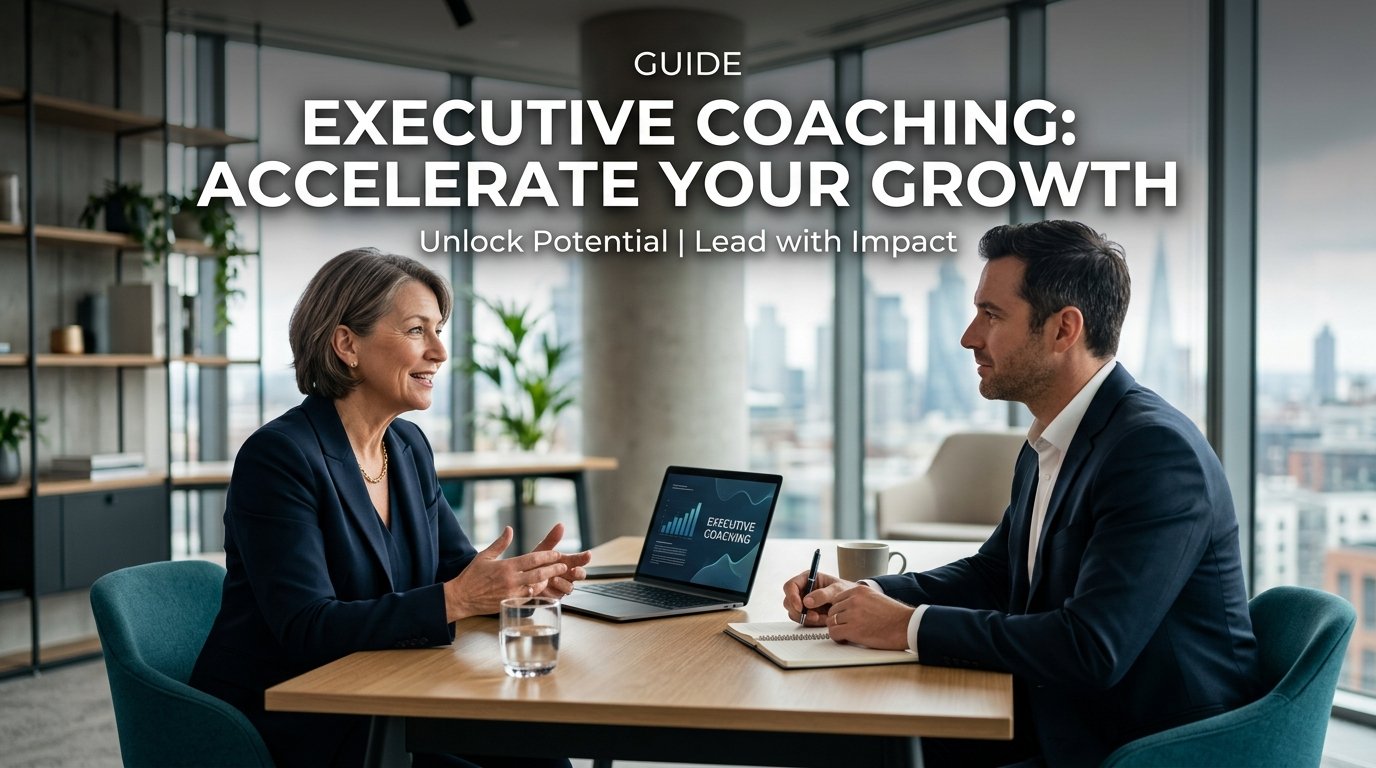
Choosing an executive coach is not the same as hiring a trainer, consultant, motivational speaker or business advisor. At the executive level, the decision is far more personal and consequential because the coach is being invited into the thinking process of a senior leader. A CEO may discuss decisions that affect hundreds or thousands of employees. A founder may discuss succession, leadership conflicts, strategic uncertainty or the future of the company. A CXO may be navigating a transition from functional expert to enterprise leader. The right executive coach can create the thinking environment in which these issues are examined with greater clarity, objectivity and accountability.
That is why searching for the Best Executive Coaches in India should not begin with a Google ranking or a famous name. It should begin with understanding what executive coaching is supposed to accomplish and what kind of leader you are trying to become.
India has developed a sophisticated ecosystem of leadership and executive coaching. The International Coaching Federation's Indian chapters maintain credentialed-coach directories, while professional coaching communities include coaches working with CEOs, senior executives, founders and leadership teams. ICF credential levels include ACC, PCC and MCC, with increasing requirements for coach-specific education and coaching experience.
The market also includes coaches with very different backgrounds. Some come from senior corporate careers. Some specialize in behavioural transformation. Some focus on executive presence and leadership communication. Others work primarily with entrepreneurs, business owners and family enterprises. Some combine coaching with strategic business experience.
The challenge for a CEO is therefore not finding a coach.
The challenge is finding the right coach.

Why Executive Coaching Has Become Important for Indian Business Leaders
India's business environment is becoming increasingly complex. Indian companies are expanding internationally, family businesses are entering new generations, startups are scaling rapidly, professional managers are taking on larger mandates and established enterprises are navigating technology, artificial intelligence, globalization and changing workforce expectations.
At the same time, the expectations placed on senior leaders have changed.
A CEO is no longer evaluated only on financial results. Leadership effectiveness increasingly includes the ability to create culture, attract talent, communicate a compelling vision, navigate uncertainty, develop successors and make difficult decisions under pressure.
This creates an interesting paradox. The more senior a leader becomes, the fewer people they can speak to openly about their own leadership challenges.
An employee may not feel comfortable challenging the CEO. A board member has a governance responsibility. A family member may have emotional involvement. A consultant may have been hired to solve a particular problem. A friend may not have the professional distance required to provide objective feedback.
An executive coach can occupy a different position.
The relationship is designed to create a confidential space in which the leader can examine assumptions, behaviours, decisions and possibilities. Professional executive coaching is generally described as a structured partnership designed to help leaders maximize personal and professional potential, with confidentiality and goal-oriented development at its centre.
That is why executive coaching can become particularly valuable at moments of transition.
A newly appointed CEO may need to establish credibility.
A successful founder may need to transition from operator to leader.
A senior executive may be preparing for a CEO position.
A family-business successor may need to establish authority without damaging family relationships.
A high-performing executive may discover that the behaviours responsible for past success are becoming limitations at the next level.
The right coach helps the leader examine these transitions before they become expensive organizational problems.
What Exactly Does an Executive Coach Do?
One of the first things to understand before hiring among the Best Executive Coaches in India is what executive coaching actually involves.
An executive coach is not simply someone who tells a CEO what to do.
In fact, professional coaching is often deliberately different from advice-giving. A strong coaching process creates structured conversations in which the executive explores goals, assumptions, behavioural patterns, options and actions. Some executive coaching providers explicitly distinguish coaching from mentoring, consulting, therapy and motivational speaking.
A good executive coach may help a leader examine why an important decision has been delayed, why a high-performing employee is not developing into a strong manager, why the executive is unable to delegate, why communication is creating unintended resistance or why a strategy that looks strong on paper is not being executed effectively.
The coach does not necessarily need to have the answer.
The value can come from helping the executive discover the answer themselves.
This is particularly powerful because senior leaders are often surrounded by people who agree with them.
A good coach should not be another person who agrees.
A good coach should be able to challenge assumptions respectfully and create enough psychological safety for difficult issues to be discussed honestly.
Executive Coaching Is Not the Same as Business Coaching
The terms are often used interchangeably, but there is an important distinction.
Business coaching tends to focus more broadly on the business itself. Topics can include revenue, sales, marketing, operations, systems, growth, profitability and business strategy.
Executive coaching focuses more heavily on the leader.
The conversation may involve leadership effectiveness, decision-making, executive presence, communication, stakeholder management, delegation, emotional intelligence, organizational influence and leadership transitions.
There is overlap.
A CEO may need both.
For example, if a founder's company is not scaling, the immediate problem may appear to be operational. But the underlying problem could be that the founder cannot delegate. In that case, a purely operational consultant may redesign processes, while an executive coach works on the leadership behaviour preventing those processes from succeeding.
That distinction is critical when choosing among the Best Executive Coaches in India.
Who Should Hire an Executive Coach?
Executive coaching is not only for executives who are struggling.
In fact, some of the strongest candidates for executive coaching are already successful.
A CEO who has built a ₹500 crore company may hire a coach because they want to prepare for the next stage. A senior executive may hire one before taking responsibility for a larger business unit. A founder may seek coaching before expanding internationally.
Executive coaching can be particularly useful for leaders experiencing one of five situations.
The first is transition. You have entered a new role and the expectations have changed.
The second is scale. Your company has grown faster than your leadership model.
The third is complexity. Decisions now involve multiple stakeholders, markets, boards or family interests.
The fourth is performance. You are already successful but want to become significantly more effective.
The fifth is succession. You are preparing yourself or another leader for the next chapter of the organization.
What Makes the Best Executive Coaches in India Different?
There is no universally accepted ranking that can objectively determine the single best executive coach in India. Any article claiming that one coach is automatically "number one" should therefore explain its methodology rather than asking readers to accept the ranking at face value.
A better approach is to evaluate coaches across several dimensions.
Professional Credential
Professional credentials can provide an important baseline. The International Coaching Federation offers ACC, PCC and MCC credentials, with each level representing increasing requirements around education, coaching experience and professional development. ICF's credentialed-coach directories can therefore be a useful starting point when researching executive coaches.
However, credentialing should not be the only criterion.
A credential demonstrates professional training and standards. It does not automatically demonstrate that a coach is the best fit for a particular CEO.
Business and Leadership Experience
If you are a founder of a complex enterprise, you may value a coach who understands business environments, leadership teams and organizational complexity.
That does not necessarily mean the coach must have personally built a billion-dollar company.
Coaching skill and operating experience are different capabilities.
The question is whether the coach understands the world in which you operate.
Coaching Methodology
Ask the coach to explain their methodology.
Do they use structured assessments?
Do they incorporate 360-degree feedback?
Do they establish measurable objectives?
Do they work with stakeholders?
Do they maintain a development plan?
Do they review progress periodically?
Some executive coaching practices begin with diagnostic exercises or 360-degree feedback and recommend multi-month engagements rather than isolated sessions.
Client Profile
This is one of the most important factors.
A coach who primarily works with middle managers may not be the best fit for a promoter or board-level CEO.
A coach specializing in career transitions may not be the right person for a family-business succession challenge.
A coach working with technology executives may have a very different perspective from someone who specializes in manufacturing or family enterprises.
Always ask:
Who do you normally coach?
Confidentiality
For senior executives, confidentiality is not a small detail.
It is foundational.
Before beginning an engagement, clarify what information remains confidential, whether the sponsoring organization receives reports and what happens if the organization is paying for the coaching.
A professional coaching relationship should establish clear expectations around confidentiality and the boundaries of the engagement.
How to Hire the Best Executive Coaches in India
The hiring process should be deliberate.
Do not begin by contacting twenty coaches.
Begin by defining the problem.
Step One: Define the Leadership Outcome
Do not start with:
"I need an executive coach."
Start with:
"I need to become better at leading a rapidly expanding organization."
Or:
"I need to transition from functional head to enterprise CEO."
Or:
"I need to improve executive presence with the board."
Or:
"I need to prepare for succession."
This distinction matters because a clearly defined outcome makes it easier to identify the right specialist.
Step Two: Identify Your Coaching Category
There are several types of executive coaching.
CEO coaching focuses on the chief executive's leadership effectiveness and strategic role.
C-suite coaching supports senior executives dealing with enterprise-level responsibilities.
Leadership coaching focuses on leadership capability, influence, communication and team performance.
Founder coaching focuses on the unique challenges of entrepreneurial leadership.
Succession coaching helps leaders prepare themselves or others for future roles.
Family-business coaching can involve leadership transition, governance and generational dynamics.
Executive presence coaching focuses on communication, credibility, influence and leadership visibility.
The more specific your requirement, the easier it becomes to find an appropriate coach.
Step Three: Create a Shortlist
A shortlist of three to five coaches is usually sufficient for an initial evaluation.
Look for evidence of:
Relevant experience.
Professional credentials.
Clear methodology.
Appropriate client profile.
Strong references or testimonials where available.
Thought leadership.
Relevant industry exposure.
Do not choose solely on social-media followers.
Step Four: Conduct a Chemistry Conversation
The introductory conversation is extremely important.
You are effectively interviewing someone who may become a confidential thinking partner.
Ask them:
"How do you normally structure an engagement?"
"What happens in the first session?"
"How do you measure progress?"
"What type of leaders do you work with?"
"How do you challenge a client who disagrees with you?"
"How do you maintain confidentiality?"
"What happens if coaching isn't the right intervention?"
The last question is particularly revealing.
A mature coach should be willing to say when coaching is not the appropriate solution.
Step Five: Ask About Measurement
Coaching can feel productive without necessarily creating meaningful change.
Ask how outcomes will be measured.
Measurement could involve:
Leadership behaviours.
360-degree feedback.
Stakeholder observations.
Defined business objectives.
Personal leadership goals.
Action completion.
Organizational outcomes.
The measurement method should match the objective.
For example, if the objective is executive presence, stakeholder feedback may be more useful than simply asking whether the executive "feels more confident."
Should You Choose an ICF-Credentialed Executive Coach?
Professional credentialing deserves serious consideration.
ICF credentials are among the most recognized professional coaching credentials internationally. The ICF Chennai Chapter, for example, describes ACC, PCC and MCC credentials as progressively requiring more coach-specific education and coaching experience.
An ACC represents an Associate Certified Coach.
PCC represents Professional Certified Coach.
MCC represents Master Certified Coach.
The credential is useful because it gives clients a way to verify that the coach has completed recognized professional training and met defined experience requirements.
But again, credentialing is a filter, not a final answer.
A CEO should consider both coaching competence and contextual fit.
A highly credentialed coach who has never worked with leaders in your environment may be less suitable than a coach with deep experience in the specific leadership problem you are facing.
How Much Does Executive Coaching Cost in India?
There is no universal price for executive coaching.
Fees vary based on the coach's experience, credentials, client profile, engagement length, coaching format and level of customization.
An individual coaching package for a mid-level executive may be substantially less expensive than a highly customized engagement for a CEO or promoter.
Some organizations purchase coaching through leadership-development programs, while founders and business owners may engage coaches privately.
Instead of asking only:
"What is the fee?"
ask:
"What outcome am I paying for?"
If coaching helps a CEO make a better strategic decision, retain a critical executive, resolve a leadership issue or successfully transition into a larger role, the economic value can be considerably greater than the coaching fee.
How Long Should Executive Coaching Last?
There is no universal duration.
Some engagements may run for three months.
Others may continue for six months, a year or longer.
The appropriate duration depends on the objective.
A focused leadership transition may require a defined period.
Deep behavioural change may require longer.
Succession preparation may span years.
Many professional coaching practices recommend engagements lasting several months rather than isolated sessions because meaningful behavioural change requires repetition, experimentation, reflection and feedback. For example, one Indian executive coaching practice recommends six or more sessions over three to six months, while another describes typical engagements of eight to twelve sessions over three to six months.
Best Executive Coaching for CEOs and CXOs
CEO coaching deserves special attention because the consequences of executive behaviour are amplified.
When a junior manager makes a poor communication decision, the impact may affect a team.
When a CEO makes one, it can affect the entire organization.
CEO coaching can therefore focus on:
Strategic decision-making.
Board relationships.
Executive-team alignment.
Leadership succession.
Organizational culture.
Communication.
Delegation.
Stakeholder management.
Personal effectiveness.
The best executive coaches in India understand that the CEO's job is not to have every answer.
The CEO's job is to create an organization capable of finding and executing the right answers.
Executive Coaching for Family Business Leaders
India has an enormous and diverse family-business ecosystem.
For family enterprises, executive coaching can involve issues that do not exist in conventional corporations.
The leader may simultaneously be:
A family member.
An owner.
A shareholder.
A director.
A CEO.
A parent.
A sibling.
A successor.
These identities can collide.
A succession conversation is therefore rarely just a business conversation.
It can involve emotion, history, family expectations, wealth, ownership and identity.
A coach experienced in family-business environments can create a confidential space where these issues are explored without turning every disagreement into a corporate dispute.
This is one area where private, high-trust coaching can become particularly valuable.
Executive Coaching for Promoters and Entrepreneurs
Promoters and entrepreneurs often face another unique challenge.
They have enormous decision authority.
That creates freedom.
But it can also create isolation.
Employees may hesitate to disagree.
Professional advisors may focus on their specific domains.
Family members may have their own interests.
The entrepreneur may therefore lack a neutral thinking partner.
Private executive coaching can provide that space.
For high-level business owners, the relationship may cover not only business performance but also leadership, strategic clarity, personal effectiveness, succession and long-term legacy.
This is where specialized private coaches such as Saurabh Kaushik become relevant. His official practice positions his work around bespoke one-to-one business and life coaching for business owners and entrepreneurs, with services including strategy, business diagnostics, leadership, execution and ongoing private guidance.
Executive Coaching in India's Corporate Sector
Indian corporations increasingly use executive coaching as part of leadership development.
The objective is not necessarily to "fix" an executive.
Instead, coaching can be used to accelerate already capable leaders.
For example, an organization may sponsor coaching for a high-potential executive who is expected to become a future business-unit head.
Another executive may need help transitioning from functional leadership to enterprise leadership.
Another may be responsible for a transformation program involving thousands of employees.
In these situations, executive coaching becomes part of the organization's leadership infrastructure.
Professional coaching communities in India also reflect this growing specialization. ICF chapters and coaching organizations run executive-coaching communities of practice, leadership programs and credentialed-coach directories.
Red Flags When Hiring an Executive Coach
The market is growing, and that means buyers need to exercise judgment.
Be cautious if a coach:
Guarantees a specific financial outcome.
Cannot explain their methodology.
Avoids discussing confidentiality.
Claims every client gets the same solution.
Uses celebrity endorsements as the primary proof of competence.
Makes extraordinary claims without evidence.
Insists coaching is the solution to every problem.
Cannot clearly explain their professional training.
Is unwilling to define the engagement.
A strong executive coach should be comfortable discussing expectations, boundaries, confidentiality, methodology and outcomes.
What Questions Should You Ask the Best Executive Coaches in India?
Before signing an agreement, ask at least these questions.
What type of executives do you normally coach?
What is your coaching methodology?
What professional credentials do you hold?
How many years have you been coaching executives?
What happens during the first 30 days?
How do you measure progress?
How is confidentiality handled?
Will my organization receive any information about our sessions?
How frequently do you recommend sessions?
What happens if we determine coaching isn't working?
Can you provide references or relevant evidence of experience?
These questions can quickly separate a professional executive coach from someone who has simply adopted the title.
A Practical Framework for Selecting the Best Executive Coach in India
If you are evaluating several candidates, score each coach from 1 to 5 on:
Executive coaching expertise.
Relevant business experience.
Professional credential.
Client-profile fit.
Methodology.
Confidentiality.
Measurement.
Communication style.
Chemistry.
Long-term strategic fit.
The highest score should not automatically win.
Use the framework to start the conversation.
Ultimately, the relationship requires judgment.
The Most Important Question to Ask Yourself
After reviewing credentials, websites, testimonials and methodologies, ask one final question:
"Would I be comfortable telling this person the truth?"
If the answer is no, don't hire them.
Executive coaching only works when the leader can discuss what is actually happening.
Not what sounds impressive.
Not what the board wants to hear.
Not what employees think.
The truth.
A CEO must be able to say:
"I made the wrong decision."
"I don't know what to do."
"I am struggling to delegate."
"I don't trust my leadership team."
"I am afraid of losing control."
"I don't know who should succeed me."
"I need to change."
The right coach creates a relationship where these conversations are possible.
Conclusion: How to Hire the Best Executive Coaches in India
Hiring an executive coach is ultimately a leadership decision.
The best executive coaches in India are not necessarily the most visible on social media, the most expensive or the people with the largest personal brands.
They are the professionals whose expertise, methodology, experience, personality and client fit align with the leader's actual needs.
Start with the problem.
Define the desired outcome.
Identify the coaching category.
Verify professional credentials.
Examine experience.
Understand methodology.
Discuss confidentiality.
Conduct chemistry conversations.
Ask how progress will be measured.
And then make the decision.
For a corporate executive, the right coach can accelerate leadership development.
For a CEO, the right coach can provide an objective thinking environment.
For a founder, the right coach can help transform the transition from entrepreneur to enterprise leader.
For a family-business owner, the right coach can provide a confidential space for navigating succession, leadership and legacy.
For a promoter or high-level business owner, private coaching can provide something increasingly rare at the top of business: a trusted, independent environment in which difficult decisions can be examined without organizational politics.
The search for the Best Executive Coaches in India should therefore never end with a Google search.
It should end with a much more important question:
Who can help me become the leader my organization needs next?
That is the standard against which an executive coach should ultimately be judged.
Frequently Asked Questions
Who are the Best Executive Coaches in India?
There is no universally accepted ranking of the best executive coaches in India. The strongest candidates vary according to specialization, credentials, business experience and client profile. ICF-credentialed coaches, experienced leadership specialists and private executive coaches can all be considered depending on the requirement. ICF's credentialed-coach directories provide one useful starting point for verification.
How do I choose the Best Executive Coaches in India?
Start by defining your leadership objective. Then shortlist coaches based on executive-coaching experience, professional credentials, methodology, relevant client experience, confidentiality, measurement and personal chemistry.
What is executive coaching for CEOs?
CEO coaching is a confidential development relationship designed to help chief executives improve areas such as strategic thinking, decision-making, leadership, stakeholder management, communication, executive presence and organizational effectiveness.
Is an ICF certification necessary for an executive coach?
It is not the only measure of quality, but an ICF credential provides useful evidence of professional coaching education and experience. ACC, PCC and MCC are the principal ICF credentials, with progressively higher requirements.
What is the difference between executive coaching and leadership coaching?
Executive coaching generally focuses on senior leaders and their performance in complex organizational environments. Leadership coaching is a broader term that can apply to managers, emerging leaders, executives and founders.
How long does executive coaching take?
There is no fixed duration. Many engagements last three to six months, while more complex leadership-development or succession relationships can continue longer.
Is executive coaching confidential?
Professional coaching should establish clear confidentiality expectations at the beginning of the engagement. If an organization sponsors the coaching, the executive and coach should agree on what, if anything, will be shared with the sponsor.
Can an executive coach help with business strategy?
Some executive coaches have significant business-strategy expertise, while others deliberately focus on leadership and behaviour rather than consulting. Clarify the coach's role before beginning the engagement.
Should founders hire executive coaches?
Yes, particularly when the founder is transitioning into a larger leadership role, scaling a company, building an executive team, navigating succession or facing complex strategic decisions.
Should family business owners hire executive coaches?
Executive coaching can be particularly useful for family-business leaders dealing with succession, leadership transitions, governance, generational differences and the separation of family and business responsibilities.
What should I ask an executive coach before hiring them?
Ask about credentials, experience, methodology, confidentiality, client profile, engagement structure, measurement and how they handle situations where coaching may not be appropriate.
What is the biggest mistake when hiring an executive coach?
Choosing a coach based only on reputation or popularity. The most famous coach may not be the best fit for your leadership challenge. Fit, trust and relevant expertise matter more than visibility alone.
Can executive coaching improve leadership performance?
Executive coaching is designed to support leadership development, behavioural change, strategic thinking and professional effectiveness. Outcomes vary by coach, client and engagement, which is why clearly defined objectives and meaningful measurement are important.
Is executive coaching only for executives who are struggling?
No. High-performing executives frequently use coaching to prepare for larger responsibilities, improve leadership effectiveness, navigate transitions and accelerate development.
What is the most important quality of the Best Executive Coaches in India?
The most important quality is not a single credential or personality trait. It is the ability to create a trusted, challenging and structured relationship that helps the executive think differently and translate insight into meaningful action.